|
Exterior Handrails — Safety, Compliance & Lasting Finish
|
Services OF
IRON WERX
30+
YEARS OF EXPERIENCE
Custom Handrails: Safety Meets Style
Handrails are essential safety elements on porches, decks, stairs, and ramps. They also form a prominent part of a property’s aesthetic. At Iron Werx, we design and fabricate exterior handrails that meet or exceed building code requirements while providing durable, attractive finishes suited for Tulsa weather. Since 1995, Iron Werx has fabricated and installed both residential and commercial handrail systems — from simple round rails to complex ornamental guardrails.
Why Exterior Handrails Matter
Beyond shaping the look of an entrance or stair, handrails provide life safety support and accessibility. Properly designed and installed handrails prevent falls, help meet ADA and local building code requirements, and often are required for approved occupancy and inspections. Poor handrail design or installation can cause hazards, premature wear, or code failures. Choosing a professional fabricator ensures the handrail is properly sized, securely anchored, and finished for long-term performance.
KEY BENEFITS OF
IRON WERX
Exterior Handrails
Code Compliance
We design handrails to meet International Building Code (IBC) and local Tulsa regulations where applicable. This includes correct height, grip profile, clearance from walls, and intermediate guard assembly to prevent falls.
Durable Materials
We fabricate in mild steel, stainless steel, or aluminum depending on exposure and design preference. Stainless is recommended for low maintenance in high-exposure areas.
Customization
Handrails can be simple round rails, squared modern profiles, or ornamental pieces integrated with balusters or infill panels.
Professional Installation
Proper anchoring into concrete, masonry, wood-frames, or metal structures is critical; Iron Werx ensures secure connections and concealed fasteners when possible.
Long-Term Finishes
Durable finishes on steel and stainless steel ensure longevity in Oklahoma weather while resisting corrosion and fading.
How Iron Werx DESIGNS
EXTERIOR HANDRAILS
01
Site Assessment & Measurement
We measure tread depths, riser heights, ramp slopes, landing dimensions, and existing conditions to create a plan that meets clearance and gripping requirements while matching your aesthetic goals.
02
Material & Profile Selection
We recommend material based on exposure and use:
- Mild Steel: Strong and economical; requires a protective finish for outdoor use.
- Stainless Steel: Ideal for coastal or corrosive environments and applications where a clean, modern look is desired.
- Aluminum: Lightweight, corrosion-resistant choice for certain modern designs.
Common handrail profiles:
- Round rail with knuckle for code-required grip.
- Square or rectangular modern profiles with grip dimensions that match accessibility standards.
- Continuous rail systems for ramps and long stairs.
03
Engineering & Strength
For commercial or high-traffic installations, we analyze loads and anchoring to ensure railings meet structural demands. We use appropriate welding methods (MIG or TIG) and gussets or brackets to transfer loads to secure anchors.
04
Fabrication Techniques
Weld joints are ground and finished for a smooth appearance when required. TIG welding is used for stainless and aluminum to create clean weld aesthetic. MIG welding is often used for mild steel where structural strength is the priority.
05
Finishing Options
- Powder coat: Color-matched, durable finish for residential and commercial use.
- Galvanize: Hot-dip galvanizing for long-term corrosion resistance, often followed by paint or powder coat.
- Brushed or polished stainless: Low maintenance and modern aesthetic.
Types of Exterior Handrails We Provide
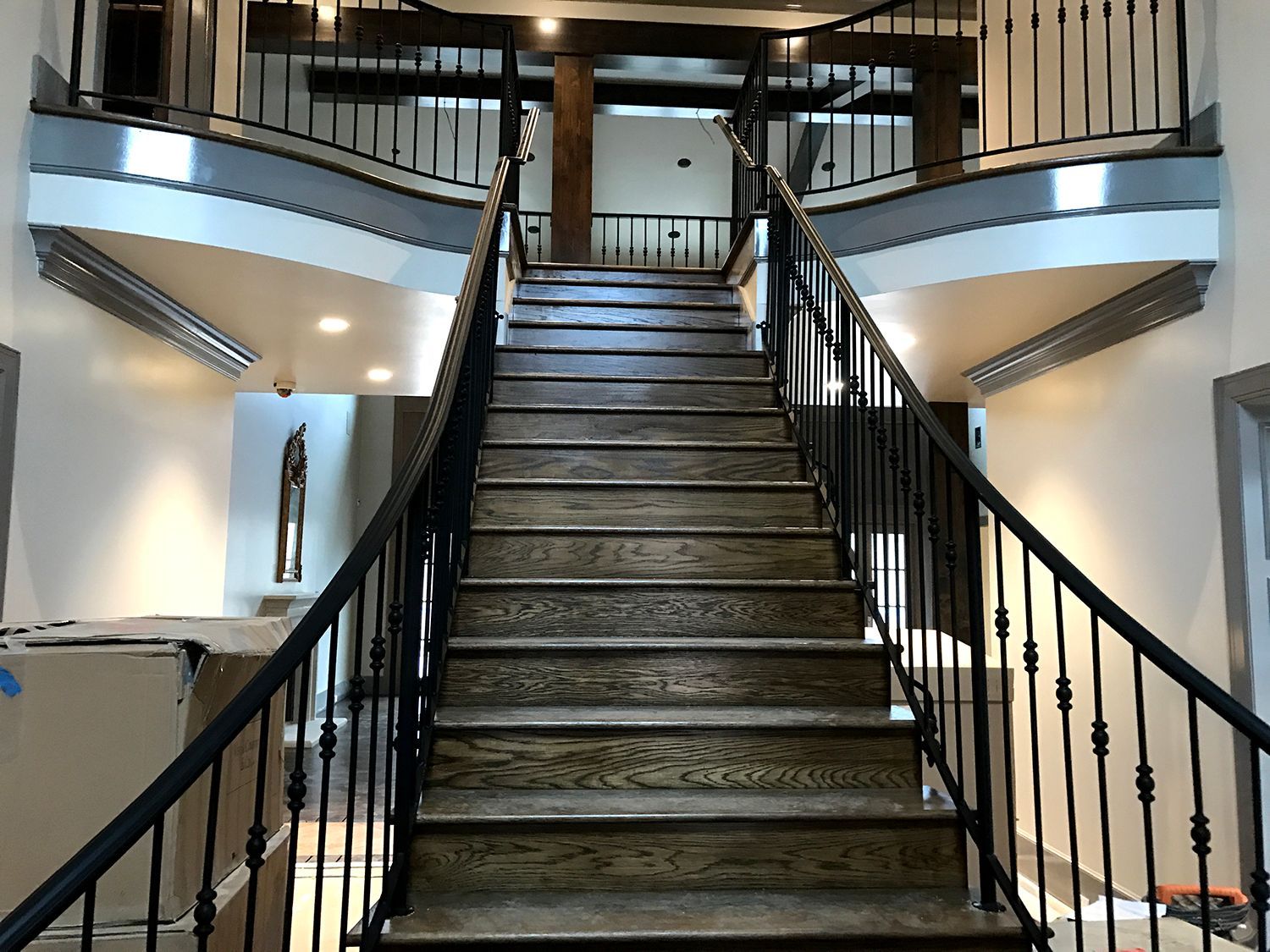
Stair handrails
Single or double-sided rails for staircases with continuous returns and code-compliant height.
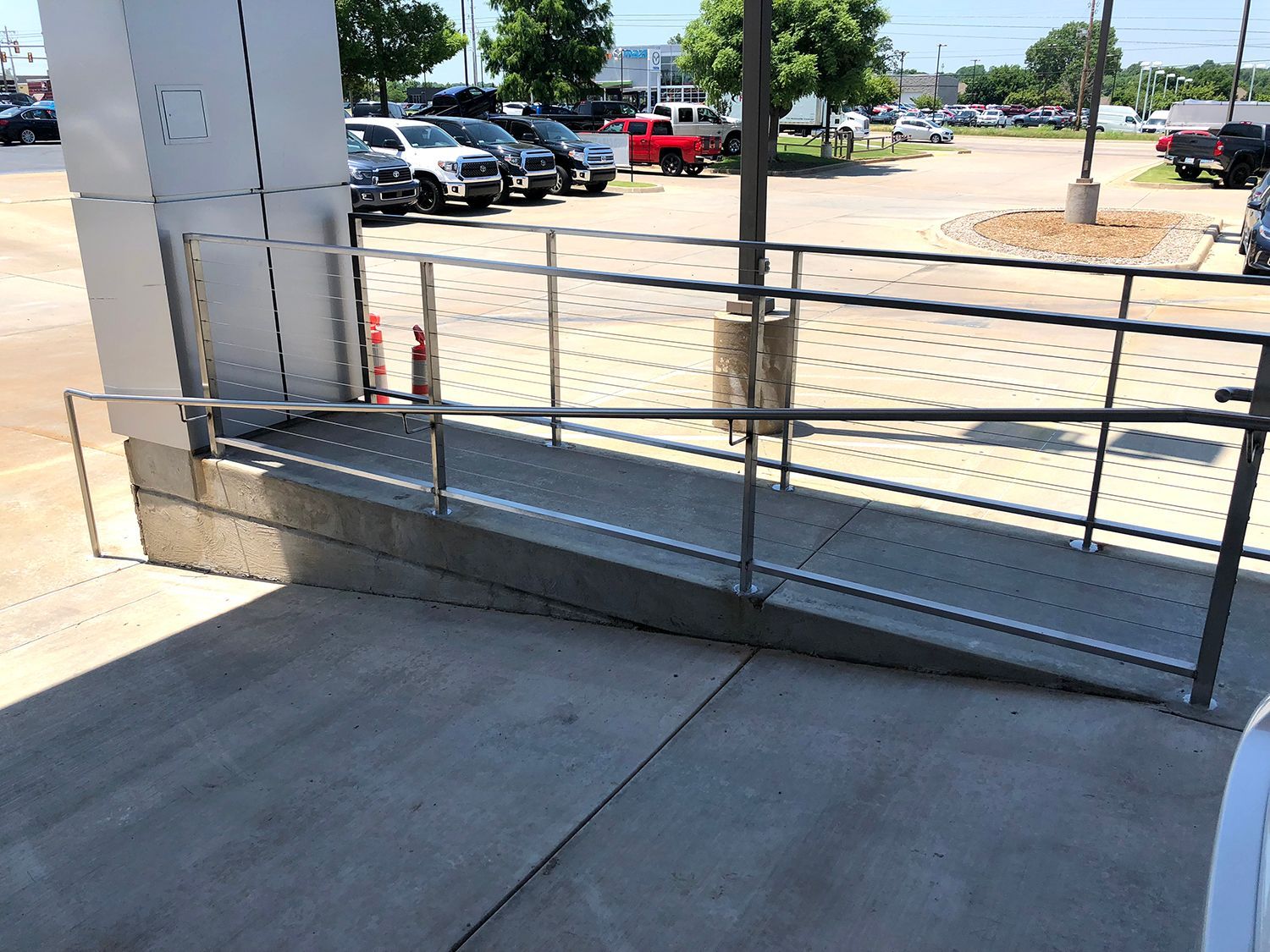
Ramp handrails
Continuous rails with intermediate supports and gripping profiles suitable for ADA ramps.
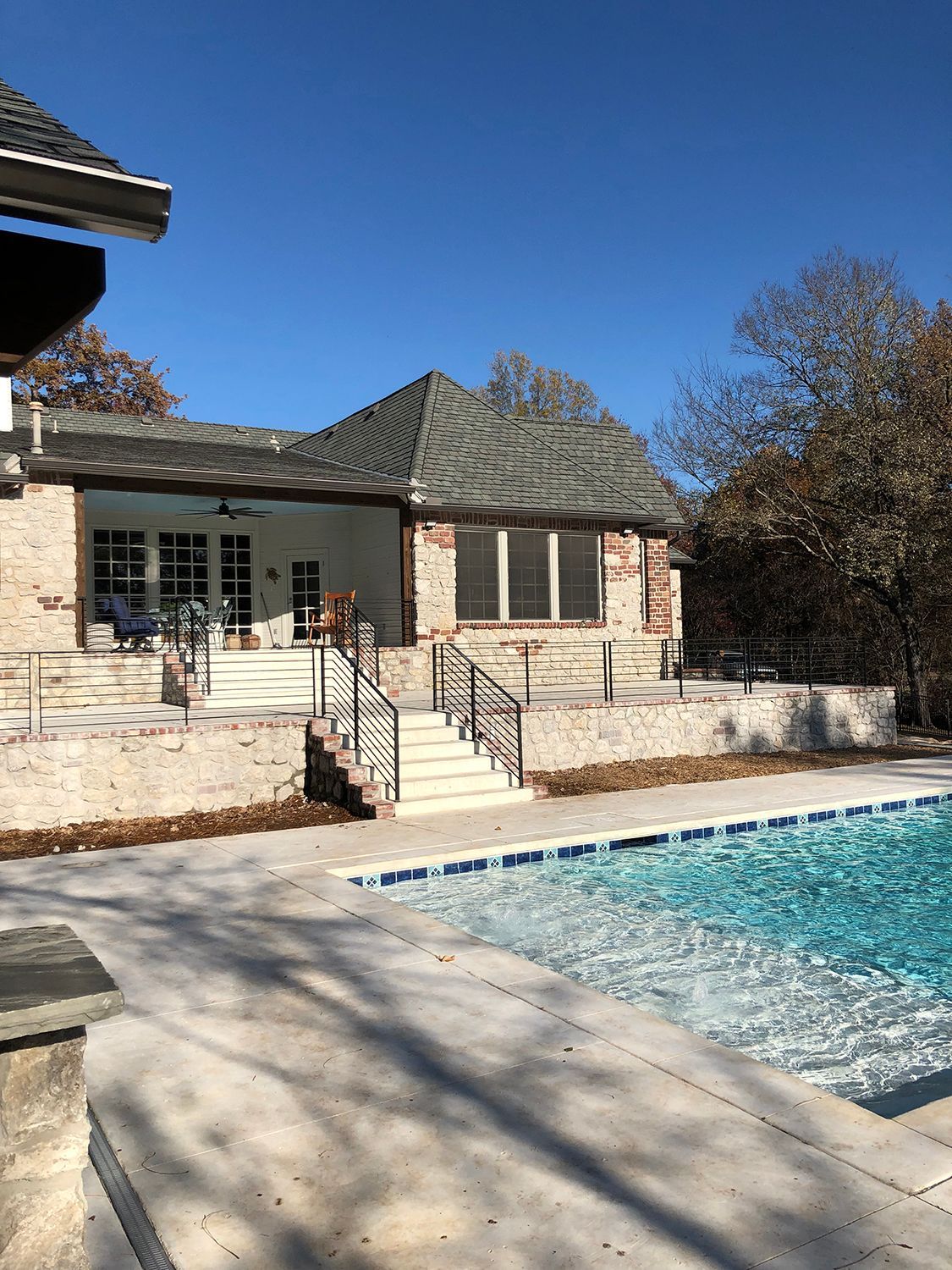
Porch & deck railings
Guardrail systems with top rail dimensioned and infill spacing to meet fall-protection requirements.
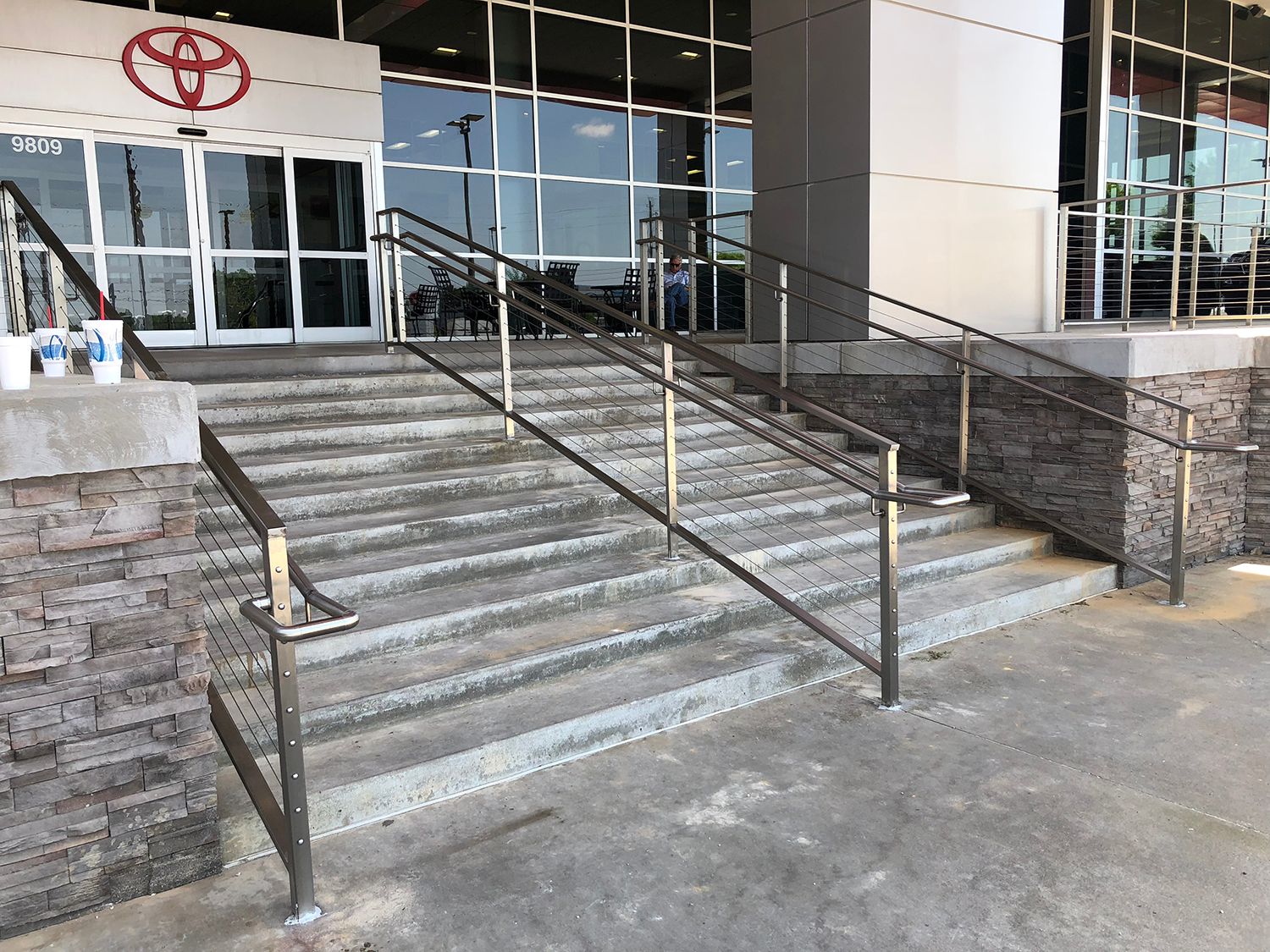
Commercial guardrails
Designed for high-use areas, including storefronts, office buildings, and public access points.
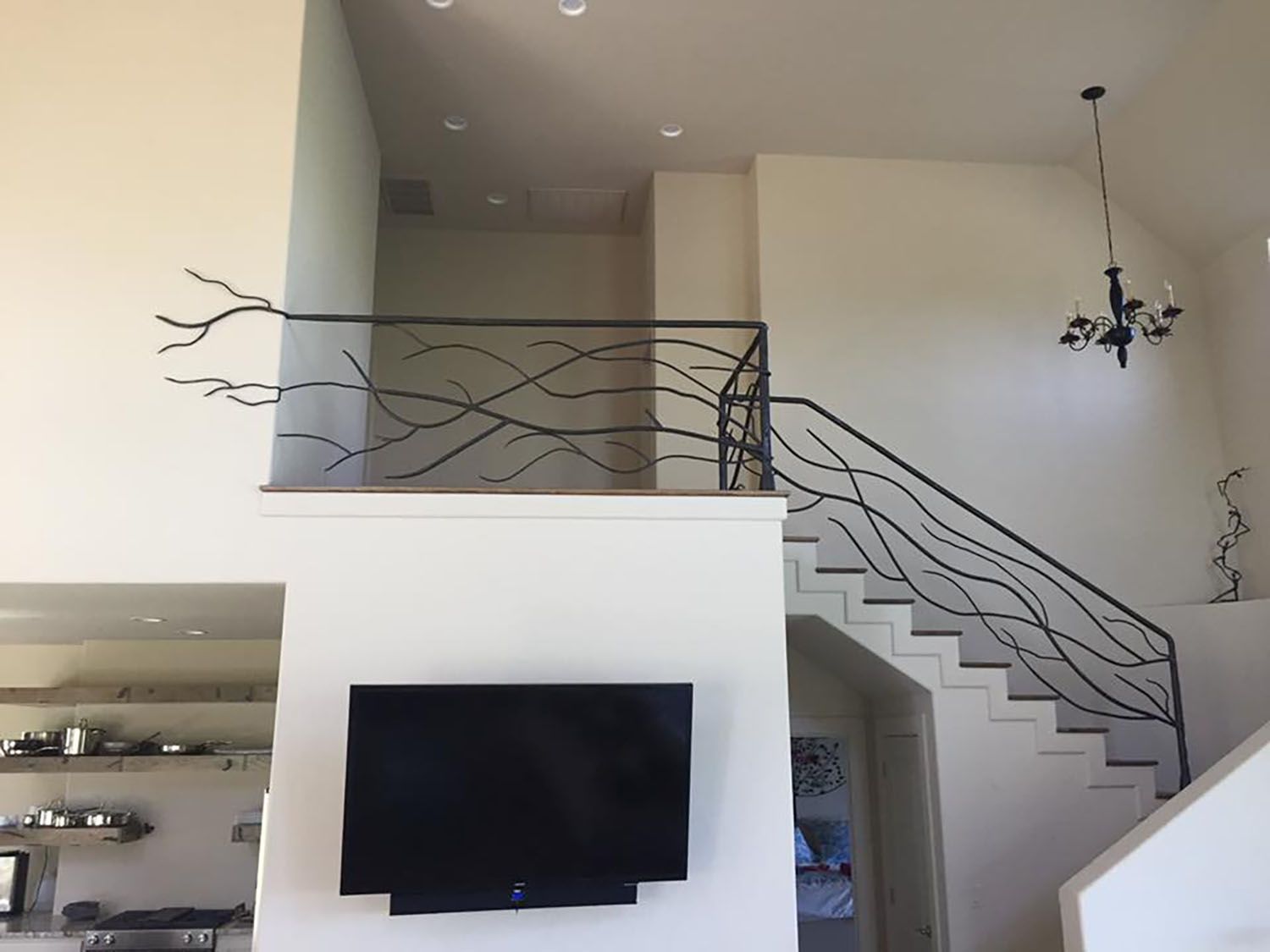
Custom ornamental railings
Decorative balusters and scrollwork integrated into functional guardrails.
Anchoring & Installation
Best Practices
Concrete installations
Use through-bolts or epoxy-set anchors sized to handle expected loads and freeze-thaw cycles.
Mounting to wood
Use structural blocking and galvanized hardware to prevent corrosion and loosening.
Masonry or brick
We locate solid mortar joints or use appropriate anchor systems to prevent cracking or loosening.
Retrofit installations
Existing stairs often require careful anchor selection and reinforcement to achieve secure connections without damaging surrounding materials.
Safety & Code Considerations
Our team stays current with local code updates and ADA guidelines. Typical code items we address
Projection and clearance from walls (minimum gripping clearance)
Handrail height (top of gripping surface)
Continuous handrails on transitions and landings
Guardrail height and baluster spacing to prevent falls
Return to wall or post to avoid snagging or clothing catch hazards
Maintenance & Longevity
Maintenance recommendations:
- Periodic inspection of anchors and brackets for looseness.
- Reapply protective finishes if you notice rusting on mild steel.
- Clean stainless steel to remove dirt and pollutants that can accelerate corrosion in urban or industrial environments.
- Lubricate mechanical connections on gates or moving components to prevent wear.
Typical Timeline & Pricing Factors
- Lead times: Simple handrail projects may be completed within 2–3 weeks. More complex commercial systems or code-dense installations may require engineering and coordination, extending timelines.
- Pricing variables: Linear footage, material choice (stainless vs mild steel), anchor type, complexity of transitions and returns, and finish options.
Frequently Asked Questions
Do you design handrails to meet ADA?
Yes. We design handrails to meet ADA grip profiles and other accessibility requirements as applicable for ramps and public access areas.
Can handrails be installed on brick or stonework?
Absolutely. We use appropriate anchors and reinforcement strategies to ensure secure connections without damaging the existing masonry.
What are common finishes for exterior handrails?
Properly finished steel and stainless steel offer the most durable performance for exterior environments.
Do you weld on-site?
For most installations we fabricate in the shop and install on-site. If site welding is required we perform it using certified welding methods and ensure proper safety protocols.
Contact & Next Steps
To discuss your next ironwork or metal fabrication project, call Iron Werx
visit our shop at 1509 East 11th Street, Tulsa, OK 74120. We’ll schedule a site visit, provide a clear quote, and outline the fabrication and installation timeline.
Request a detailed estimate — our team will follow up within 48 hours.
Iron Werx — your partner for custom metal fabrication in Tulsa that blends beauty with structural reliability.